
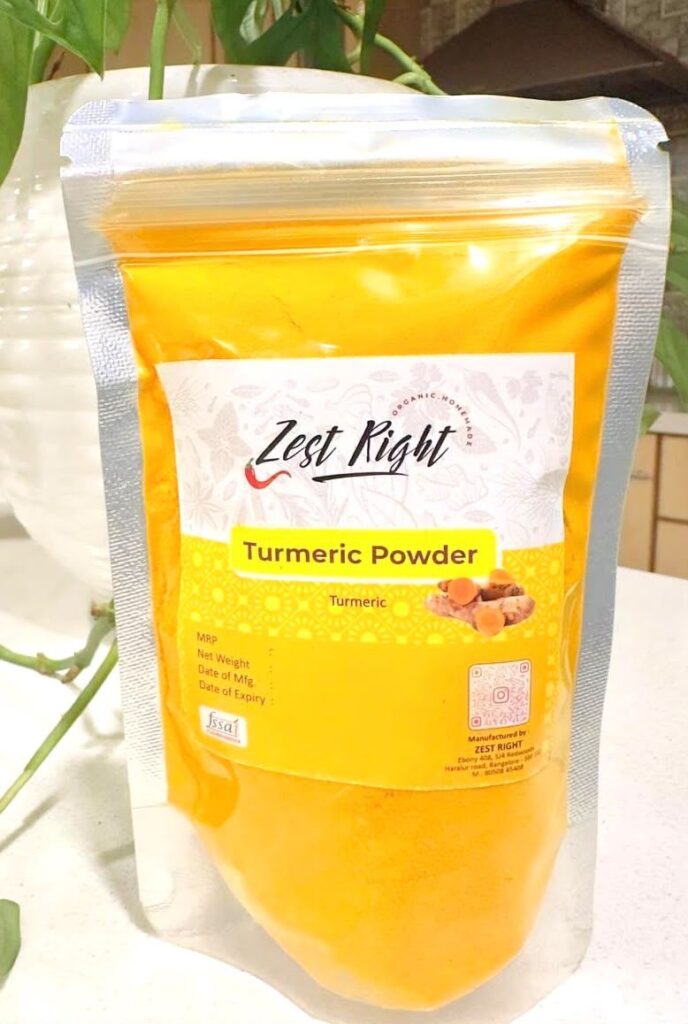
Single-spice powders are the quiet workhorses of an Indian kitchen. They rarely get the attention that a complex masala does, but they are in almost everything you cook.
A note before we start: these are foods, not medicines. Spices have been valued in traditional cooking for a very long time, and some have genuinely interesting properties – but nothing here is a treatment for anything. If you have a medical condition, talk to a doctor rather than a spice company.
Turmeric
Turmeric is the one nearly every Indian dish starts with. Its active compound, curcumin, is naturally rich in antioxidants, and it has been used in traditional cooking and wellness routines for centuries.
How to use it
Add a quarter to one teaspoon while cooking curries, dals, vegetables, soups, rice dishes or marinades. It can also be stirred into warm milk as part of a daily routine.
One practical tip: turmeric needs fat and heat to release properly. Adding it to hot oil at the start of cooking does far more than sprinkling it over a finished dish.
Moringa (drumstick leaf) powder
Moringa is naturally rich in plant-based nutrients including vitamins, minerals and antioxidants. It has an earthy, slightly green flavour that takes some getting used to.
How to use it
Add half to one teaspoon to smoothies, juices, soups, dals, curries or chutneys – or mix it straight into roti and paratha dough, which is the easiest way to get it into a family meal without anyone noticing.
Start with a small quantity and build up. Moringa is one of those ingredients where more is definitely not better.
Curry leaf powder
Fresh curry leaves are wonderful and go bad quickly. A powder captures much of that aroma in a form that lasts, and it is an easy way to add depth to rice, dals and vegetables.
Why freshly ground matters more here than anywhere else
With single spices there is nowhere to hide. There is no blend of twelve other ingredients masking a stale, faded base. If the turmeric is old, the dish tastes dull, and most people blame their cooking rather than the jar.
- Buy smaller quantities more often rather than a large pack once a year.
- Store away from the stove – heat and steam are the enemy.
- Keep containers airtight and always use a dry spoon.